Moving on…

June 22nd, 2009

The cooling system is finished! We’ve finally connected the pipes that run through the cab to the radiator. All the appropriate pictures can be seen by clicking here (I’ll add some more next week).

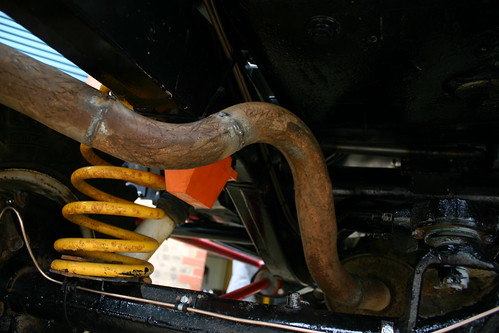
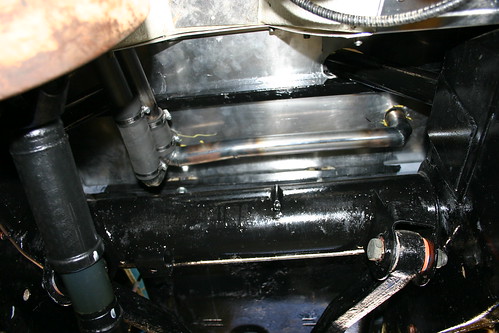
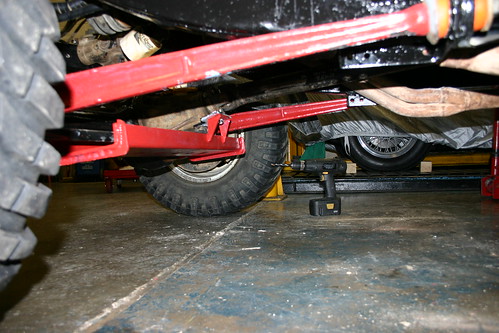
The water pipes underneath the car. The radiator is directly above them.

The water pipes underneath the car. The radiator is directly above them.

The brake lines are finished too, and the brakes are bled and working. Here are all the brake pipe photos.

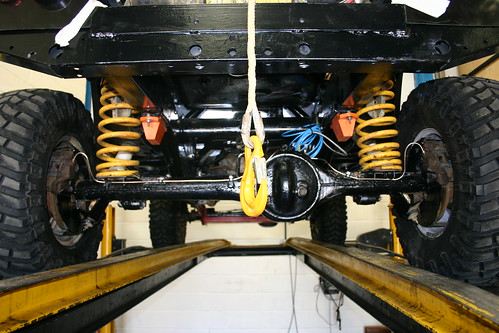
Here you can see the (nearly) finished rear axle. Note brake pipes.

Here you can see the (nearly) finished rear axle. Note brake pipes.

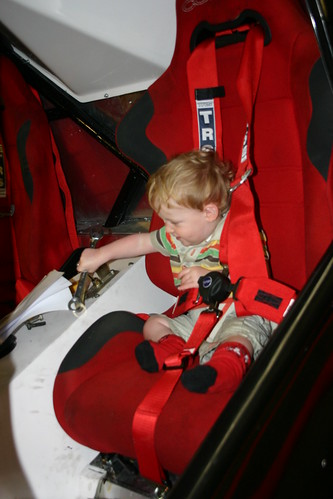
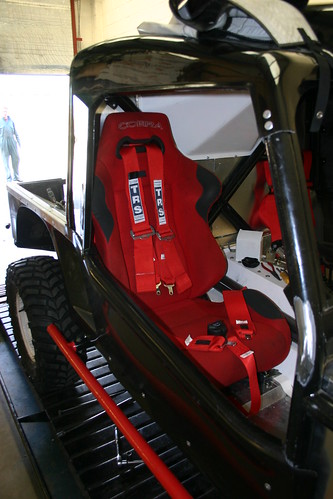
Also, we’ve got the driver’s seat in! This was a bit of a game as we decided not to use the supplied Tomcat seats, so the mounting points were in the wrong place. So we made up a bracket for the seat runners and bolted it in. We attached the shoulder harnesses directly to the rollcage behind the seat, and the side straps to the rear bolting point for the seat. We’ll find somewhere to attach the last belt next weekend.

Drivers seat with belts fitted

Driver's seat with belts fitted

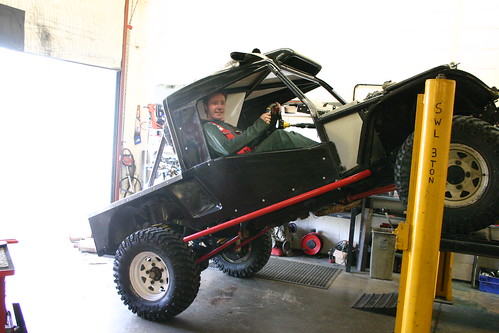
Then we lifted the front up on the ramp, for no real reason.

Whee!

Whee!

A quick update

June 15th, 2009

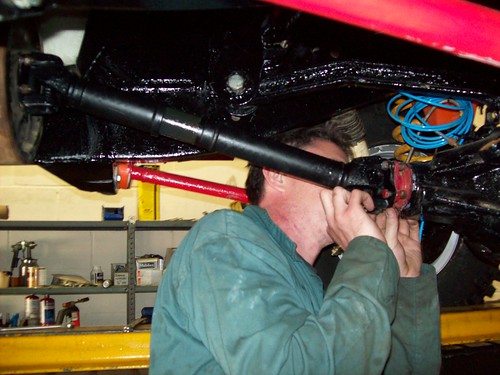
So, yesterday, we fitted the rear propshaft:

The blue piping is for the rear air locker.

The blue piping is for the rear air locker.

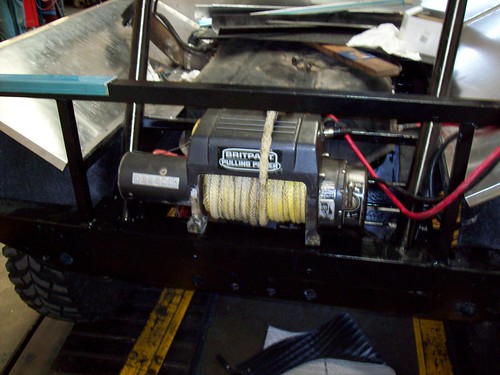
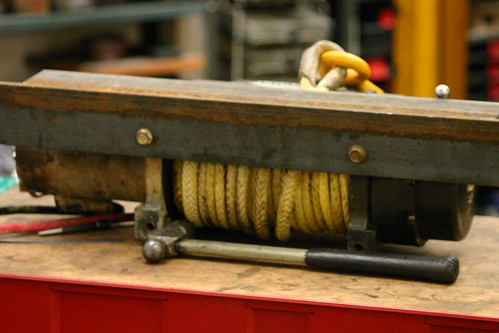
Attached the rear winch:

The rear winch, a Britpart 9500i

The rear winch, a Britpart DB9500i

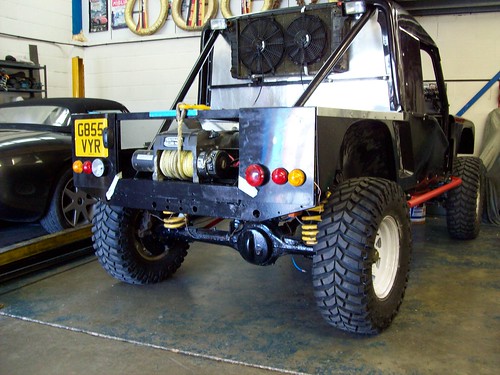
And put the lights in the rear panels. We’ll be attaching them once they’re wired up.

Well probably end up using something stronger than tape.

We'll probably end up using something stronger than tape.

Bye!

Running out of time…

June 1st, 2009

We’ve set a self-imposed deadline of July 19th to have the car on the road, so we can take it to Billing. Then we took a look at our schedules and realised that we only have six build days left! We’ll work it out somehow.

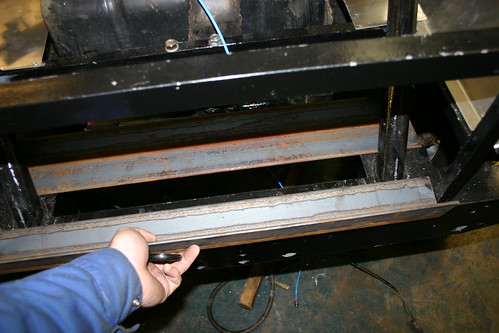
The rear winch mounts are on, which can probably be best described by some photos:

The angle iron that will eventually hold the rear winch in place

The angle iron that will eventually hold the rear winch in place

Fitting the winch

Fitting the winch

Welding the plates in place

Welding the plates in place

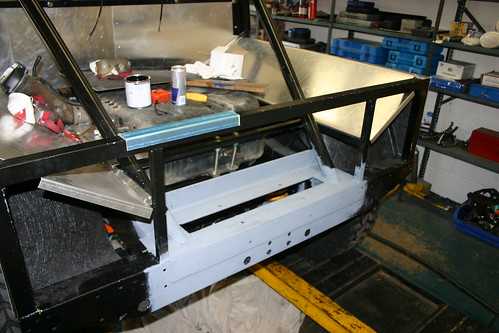
Undercoat

Undercoat

And finished

And finished

The rest of the day was spent on bodywork (again). We’ve finished up the side panels, and riveted practically everything on.

Riveting stuff

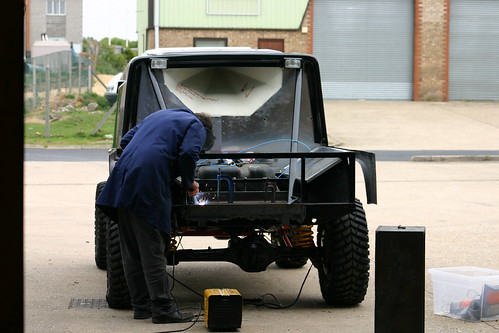
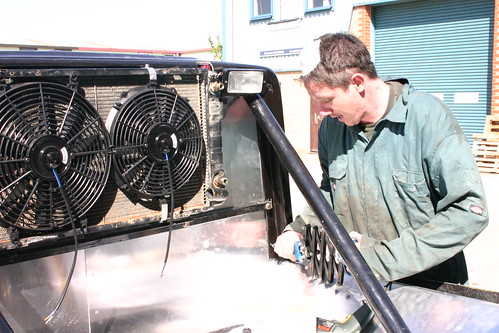
Riveting stuff (and look - the rad is finally fitted!)

The only bodywork left to fix on is the front wings, rear light panels and bonnet (in so much as that is fixed). We also need to add some metal finishing strips to the rear of the car to cover up some creative bodywork adjustment.

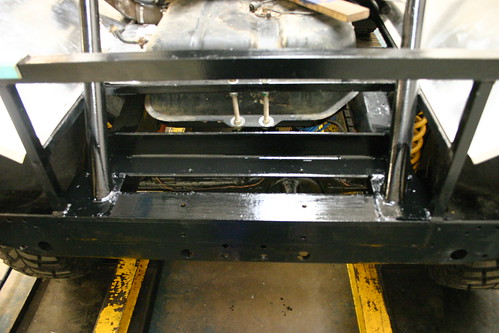
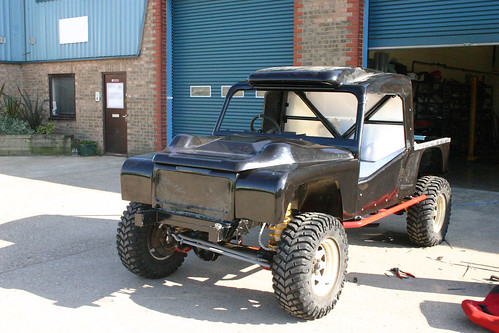
All the external bodywork is on! Note the seat dumped on the right of the picture

All the external bodywork is on! Note the seat on the right of the picture

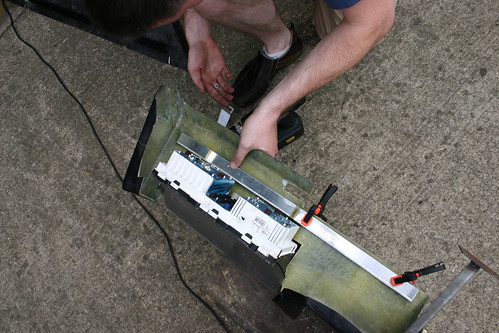
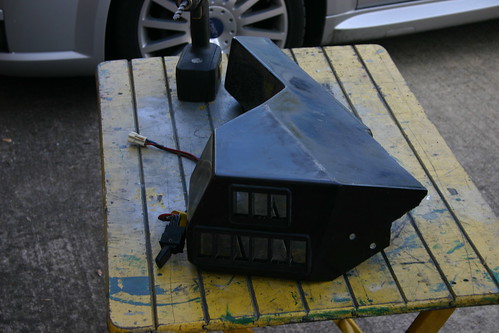
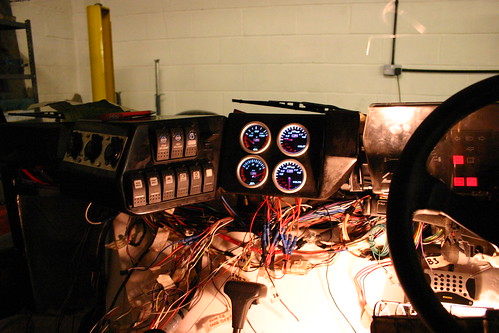
We also started to hack the dashboard to bits to make it fit around the wiper motor, with further hacking required to make the original instrument panel fit into it.

And that’s it! We’re not going to do anything else until the 14th June. Still on our “To do” list for the MOT:

  • Dashboard
  • Electrics
  • Battery and air pump box
  • Front winch
  • Front bumper
  • Rad pipes
  • Exhaust
  • Steering guard
  • Diff guard(s)
  • Wing mirrors
  • Fit windscreen
  • Wiper blades
  • Windscreen washers
  • Front lights
  • Rear lights
  • Rear brake lines
  • Fit bonnet
  • Fit front wings
  • Rear propshaft
  • Fuel lines
  • Air intake and snorkel
  • Fit Seats and harnesses
  • Check fluids
  • Start engine!

Six days..?

Bodywork

May 10th, 2009

So, we have just spent a day doing (most of) the bodywork. Dear Lord, but there’s some chopping to do. My friend Nase summed it up quite well: “The rear tail section is the only bit that actually fits without needing modification. And we need to cut it up anyway because of the winch.”

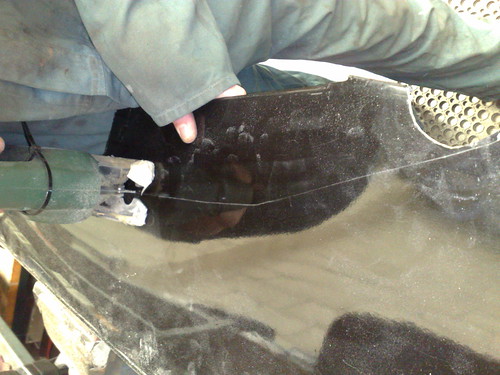
Some of the mess chopping up fiberglass makes

Some of the mess chopping up fiberglass makes

We were expecting to have to do some modifying because of the number of different ways a Tomcat can be set up, but we ended up hacking huge chunks out of pretty much everything. Nothing is too complicated, but time-consuming.

The line marks one of the cuts for this wing

The line marks one of the cuts for this wing

The side walls, in particular, went on and came off again around fifty times. Still, it’s done now. We’ve lightly rivited the panels on, in case we have to take them off to get wiring in later. We’ll bang some more rivets in closer to the end of the build.

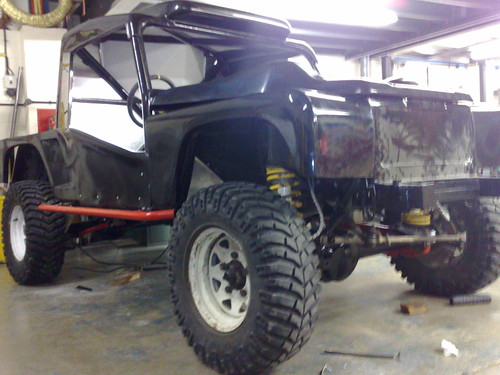
Passenger side

Passenger side

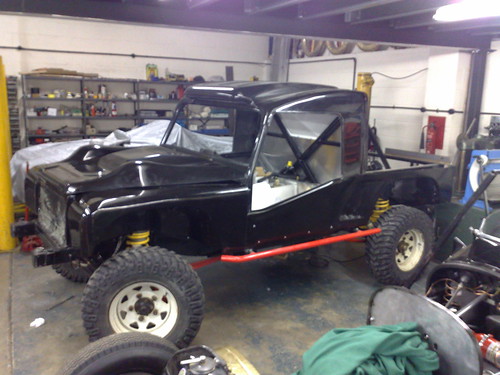
Still, it is starting to look the part!

Drivers Side

Driver's Side

Cooling, diffs and bodywork

May 6th, 2009

(Note - I’ve got some better photos of the cooling system somewhere, but I don’t know where they are . I’ll update this post when I find them.)

A cheap ARB-equipped diff came up for sale on a forum I look at, so that was job one this weekend. Unfortunatly my track rod protector (like this one, but bigger) had to come off first, and that required taking (hammering) a bolt from the radius arms out.

The paint is coming off already. Bah.

The paint is coming off already. Bah.

Still, now I have front and rear lockers, so that can only be a good thing, and I’ve fitted the front propshaft, so the front running gear is all done (apart from the fact that I lost the diff drain plug somewhere)!

To get the water from the rear of the car to the engine, we’ve used some flexipipe and some exhaust tube to run the water through the cab, next to the driver’s seat.

Ill kee my legs well clear, I think

I'll kee my legs well clear, I think

We’ll cover the tubes in heat wrap and paint them red (as required in the regulations). Now all we have to do is run tubing from the rad through the rear floor to join it all up.

In the midst of all this, we bit the bullet and started to cut up the bodywork. The front offside inner wing (top tip: The rear inner wings are the same, whereas the the front wings are different, and will only fit one way around, depending on which side the pedal box is on) needed cutting to avoid fouling on the roll cage and a power-steering mount on the chassis, and then we rivited it on in two places in case it needed to come off again.

No turning back now...

No turning back now...

We fitted the outer wing over the inner one, but we didn’t fix it as we still need to make the holes in it for the lights. It didn’t fit terribly well - hopefully some adjustments to the inner wing will help (we will fit the nearside wings together before mounting them on the car). The outer wing needed cutting to avoid the rollcage, and also the top of the suspension mount.

A quick note about the rear winch - I happen to have some thick angle iron that’s exactly the right size, so I’ll cut some channels into it to avoid the rear rollcage and paint it up. Hopefully that will be quite a quick job!

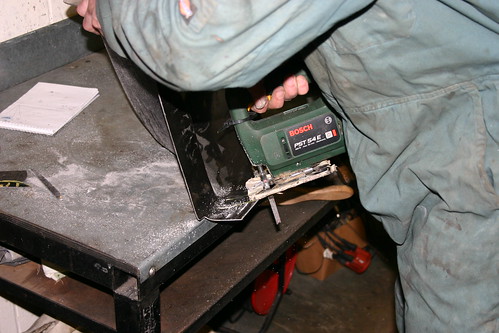
This may take some sawing...

This may take some sawing...

Plodding on

March 31st, 2009

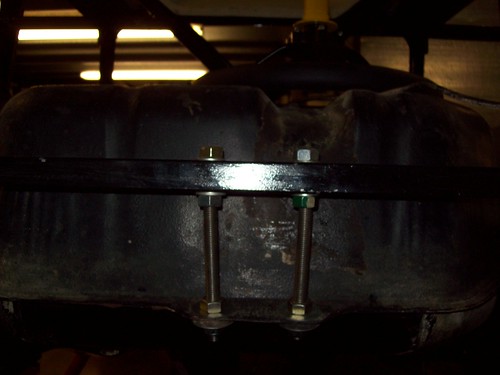
The fuel tank is in, held level using bent studs.

The rear of the fuel tank

The rear of the fuel tank

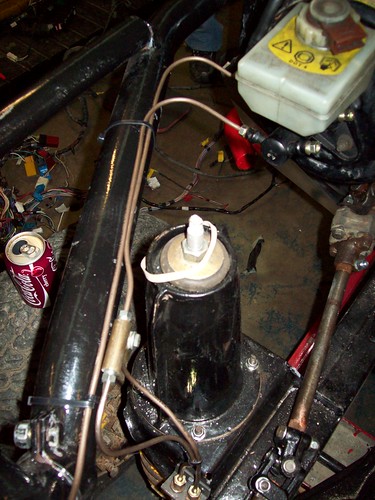
The front brake lines are in, too.

Front brake lines

Front brake lines

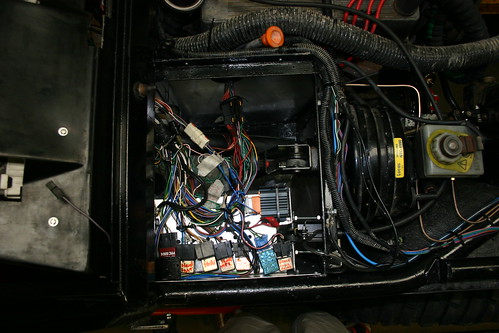
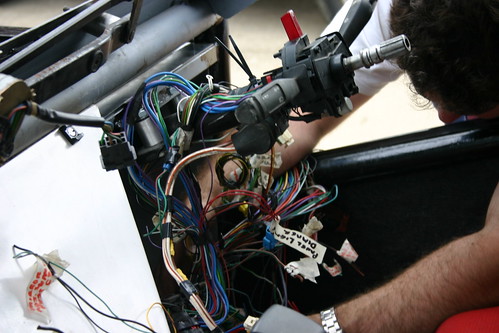
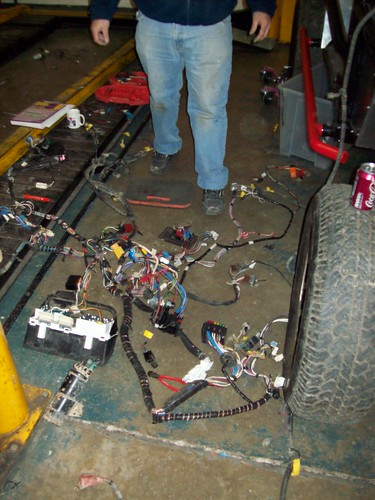
Finally, oh dear God, we took a look at the electrics. When we removed the wiring loom from the Range Rover we labelled all the wires with strips of masking tape. Since then, the labels have either fallen off or rain has washed the writing on them away.
Great.
So, my brother was lucky enough to have the job of figuring it all out again, which he did by re-wiring as much stuff as he could on the floor of the workshop.

Lots of head-scratching going on here

Lots of head-scratching going on here

This would have been easier if (a) I hadn’t ditched a load of the switches along with the body of the Range Rover, and (b) if the Haynes manual had the right colours for the wires in it’s wiring diagrams.
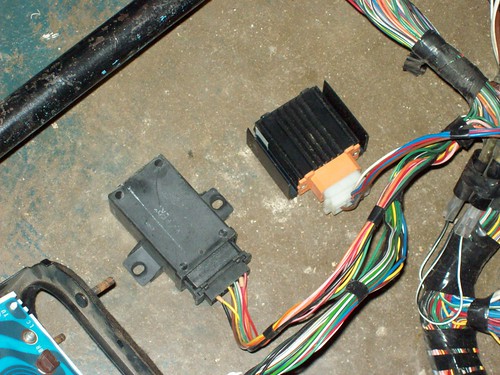
Still, he got there in the end (re-labelling as he went), but there are two components we don’t recognise.

Mystery Parts

Mystery Parts

I’ve asked the clever people at the Devon 4×4 Forum what they might be, so no doubt I’ll know soon, and I’ll let you know.

[Update] On the left, the central locking controller, so that can go. On the right, the headlight Dip/Dim controller, which has to stay. Good work, Internet!

Fuel Tank Issues

March 9th, 2009

Lots of Tomcats are fitted with aftermarket fueltanks, usually all pretty and shiny, and made of aluminium. As I’m trying to do all this on a budget, I’m going to use my old Range Rover one. There are a few problems with this.

  1. It’s meant to be mounted at an angle, and my frame is flat
  2. Although there is a section built into the rear frame where the tank would fit, it would get in the way of the rear winch.
  3. Only very early Range Rovers have locking fuel caps, as the flap locked on the bodywork of all the later ones.

So, we decided to move the existing mounts forward, and mount the tank at (close to) the original angle. We cut the box section away, then welded them back in further up.

Rear of the Tomcat with the box section removed.

Rear of the Tomcat with the box section removed.

Welding the box section back into place

Welding the box section back into place

The (grubby) fuel tank, in its new place. We will use spacers to get the angle right.

The (grubby) fuel tank, in it's new place. We will use spacers to get the angle right.

We’ll try and grab some rubber mounts for it, but I’m not convinced they’re really needed (if we’re flexing the fuel tank, then we’re flexing the chassis). A Land Rover breakers up the road has a filler neck and locking cap from an old Range Rover, which is mine for £25. The only thing missing is the cap key!

We also mounted the hand brake. We put it right at the back of the transmission tunnel, with some chequerplate mounted underneath to strengthen it.

Viewed from under the car: Making a cardboard template for the chequerplate.

Viewed from under the car: Making a cardboard template for the chequerplate.

As you might have seen in the early photos, the Range Rover had a Britpart DB9500i on the front (here is a photo) which has been very good, but it has always been very difficult to pull the rope out by hand. This winch is now going on the back, as I have just (literally an hour ago) agreed to take a Warn 8274 off a nice chap’s hands (more on that in the future). So, we decided to take the Britpart winch apart to see if we could spot anything wrong.

Some bits of winch.

Some bits of winch.

It was all fairly straightforward and came apart easily. We cleaned and oiled all the moving parts and put it back together.

Cleaning the winch. Note the gearbox in the foreground.

Cleaning the winch. Note the gearbox in the foreground.

Cleaning made a big difference, but it’s still not perfect. We have since realised that we didn’t knock the braking mechanism from the inside of the winch drum, so we’ll do that next time we go to the workshop.

Finally, we made some brackets to hold the brake lines to the chassis.

Brake line brackets

Brake line brackets

It’s been a while

March 2nd, 2009

So, yes, it’s been a while since the last update, and quite a lot has been done. Let’s start with the big stuff first.

Ta-daa!

Ta-daa!

There’s an engine! And it’s in! Ignore the filthy power steering unit (that will get cleaner as the photo’s go on) if you would. Getting the engine in involved using a hoist to get it halfway in, balancing it on a jack, removing the ropes and then re-attaching them through the windscreen to get the engine back far enough to mount. This may have been easier if not for Big Problem #1: The gearbox is the wrong size.

And the problems begin...

And the problems begin...

Let me explain. Quite a lot of people swap the high/low ratio transfer boxes out of automatic Range Rovers for one from a manual, which has a driver-selectable central diff lock (rather than an automatic one). I have not, for various reasons, but the people at Tomcat assumed I had, which meant they built the rollcage around a gearbox that is two inches shorter than the one I have. This has caused some problems, ranging from the small (the drum for the handbrake fouled on one of the seat mounts) to the large (the propshafts were the wrong length). I solved the seat mount problem with a hacksaw, but the propshafts had to be sent back to Tomcat (along with the seats, which turned out to be a bit too small for my rather generous backside) to be modified.

The transmission cooler

The transmission cooler

But anyway - the engine is in, the gearbox(es) are in, the steering is in, the transmission cooling is in, the oil cooling is in (in the bin, we’re just going to blank it off and put a guage on to keep an eye on the temperature). Some of the metal panels have been fitted and the transmission tunnel is in, with the gearsticks fitted.

Spacious, huh?

Spacious, huh?

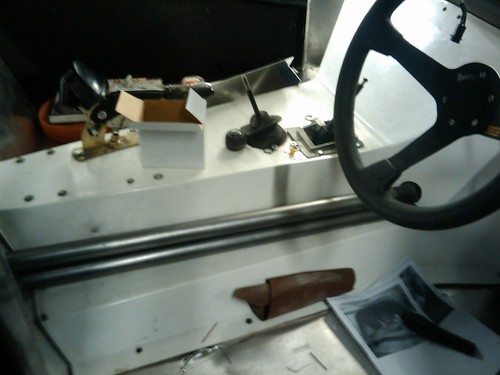
I’m doing some thinking about the dashboard - ideally I would like to keep the original instument panel, as this would be much easier to wire in, but it won’t fit with the supplied dashboard. However, the dashboard is actually in two bits, so I may remove the driver’s half and fit the instrument panel above the steering column, as in the photo above. The alternative is to cut a gap in the dashboard big enough for the panel to fit into, but that’s a decision for another day.

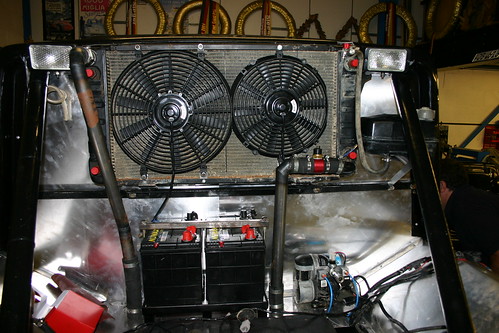
The rear of the cab, with hole cut for the air to get to the radiator

The rear of the cab, with hole cut for the air to get to the radiator

Finally, I used a nibbler to cut out the hole for the air to get to the radiator. Note the brackets at the top of the picture above for the top pegs of the radiator to fit into. The bottom pegs sit on some box section which isn’t fitted yet.

Next weekend - brakes and fuel!

Hello, it looks like a car!

January 19th, 2009

After months putting up with piles of bits, and then a month or so of having something that looked like a climbing frame, we’ve fitted the running gear and suddenly it looks like a car.

It finally looks like a car!

It finally looks like a car!

Getting the running gear onto the chassis was a case of lowering the chassis onto the axle and seating the springs, holding them in place (so they couldn’t shift backward or forward) with ratchet straps whilst getting the trailing arms / radius arms seated, then compressing the springs and tightening the arm bolts. To compress the springs, you can use spring compresser (obviously), a ratchet strap around the axle and the bodywork, or do what we did and drop a car ramp onto the whole thing.

Compressing the rear springs. Note my important job as a weight.

Compressing the rear springs. Note my important job as a weight.

That was about it this weekend - we did a touch more painting, put the steering wheel together, pressure-washed the engine (again), cleaned up some parts, scratched our heads about where to put the petrol tank and offered the winch bumper to the front to see how much we need to take off the chassis (about eight inches, distressingly).

And we played silly buggers =]

Vroom vroom!

Vroom vroom!

The next job will be getting the engine and gearbox mounted, some time around the end of the month. Stay tuned!

Progress!

January 11th, 2009

Everything is painted! Chassis, suspension components, running gear - all done!

Moving the axles into the workshop

Moving the axles into the workshop


It looks much better, I think you’ll agree.
Axles all painted. Note the runners under the rear wheels - the brakes are stuck on.

Axles all painted. Note the runners under the rear wheels - the brakes are stuck on.


Next weekend, we actually start putting things back together!
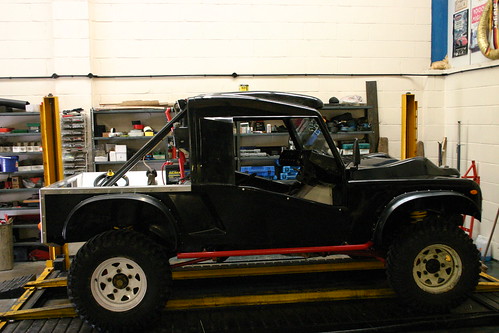
With red rock sliders.

The chassis, with red rock sliders.